
With rising concerns over climate change and fossil fuel dependency, renewable energy sources like hydroelectric power have gained significant attention. But what is hydroelectric power exactly, and how does it work? In this beginner-friendly guide, we’ll break down how moving water is converted into clean electricity, and why hydro is one of the most reliable energy sources on Earth.
Understanding the Basics of Hydroelectric Power
Definition and Core Concept
Hydroelectric power—also known as hydropower—is a renewable energy source that generates electricity by using the kinetic energy of flowing or falling water. It’s one of the oldest and most widely used forms of clean energy across the globe.
Key Elements of Hydropower:
- Water source: Typically rivers or reservoirs
- Elevation drop: Water must fall from a height to generate force
- Turbine: Converts water’s kinetic energy into mechanical energy
- Generator: Transforms mechanical energy into electricity
How Does Hydroelectric Power Work?
Hydropower systems may vary in size and design, but the basic principle remains the same: convert the energy from moving water into usable electricity.
The Step-by-Step Process
- Water Intake: Water is stored in a reservoir behind a dam or diverted from a flowing river.
- Water Flow: When needed, water is released and flows through large pipes known as penstocks.
- Turbine Rotation: The force of the water spins the blades of a turbine located at the bottom of the dam.
- Power Generation: The turbine is connected to a generator, which produces electricity as it spins.
- Power Distribution: The electricity is then sent to power lines and distributed to homes and businesses.
Types of Hydroelectric Power Plants
Hydroelectric systems come in several different formats depending on the geographical and environmental conditions.
1. Impoundment (Dam-Based)
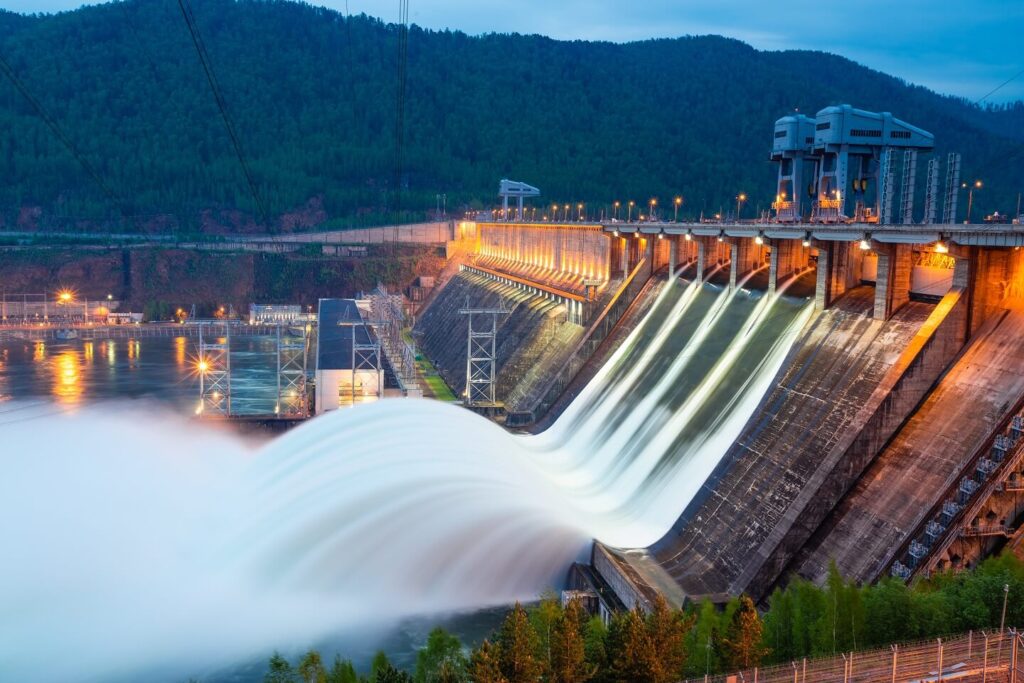
This is the most common type of hydro plant. A dam stores river water in a reservoir. When released, the water flows through turbines, producing electricity.
2. Run-of-River
These systems generate power without a large reservoir. Water is channeled through a canal or penstock, relying on natural river flow and elevation.
3. Pumped Storage
This acts like a battery. During low energy demand, electricity is used to pump water to a higher elevation. When demand rises, the stored water is released to generate electricity.
Benefits of Hydroelectric Power
Hydropower isn’t just clean—it’s also practical, scalable, and dependable. Below are some of its key advantages:
- Renewable: Uses the Earth’s natural water cycle
- Low Emissions: Produces no direct air pollution
- Flexible: Can adjust output quickly to meet demand
- Reliable: Consistent power source with long facility lifespans
- Economic: Lower operating costs compared to fossil fuels
Challenges and Environmental Considerations
Despite its many benefits, hydroelectric power is not without drawbacks, especially related to environmental and social impact.
Common Concerns Include:
- Disruption of Ecosystems: Dams can alter fish migration and aquatic habitats
- Relocation: Reservoir construction often requires displacement of communities
- High Initial Cost: Building dams and infrastructure is expensive
- Risk of Drought: Dry seasons or droughts can limit power generation
Global Use and Future of Hydroelectric Energy
Hydropower is a cornerstone of energy systems in many countries. Nations like China, Brazil, Canada, and the United States lead the world in hydroelectric capacity. As the global demand for clean energy grows, hydro remains a reliable pillar in the transition to sustainability.
Innovations on the Horizon
- Floating hydro systems for low-impact solutions
- Hybrid systems combining solar and hydro
- Advanced fish-friendly turbines
How to Support or Implement Hydroelectric Solutions
While you may not build a dam yourself, individuals and businesses can support hydroelectric power in a few meaningful ways:
Ways to Participate in the Hydro Movement:
- Choose Green Energy Plans: Many utility companies offer options that include hydro in their mix.
- Educate and Advocate: Raise awareness about clean energy choices in your community.
- Explore Micro-Hydro: Rural property owners can sometimes install small-scale systems.
Hydroelectric power is more than just a marvel of engineering—it’s a sustainable energy solution with real-world impact. By understanding what hydroelectric power is and how it works, you’re better equipped to appreciate the role water plays in powering our lives. As global energy needs grow, tapping into the natural force of water might just be one of our smartest moves yet.
Ready to explore more about renewable energy? Check out our related articles on solar power, wind energy, and how to reduce your carbon footprint starting today.