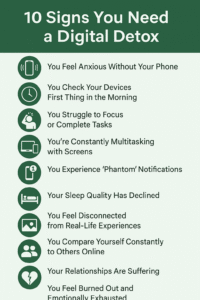
10 Signs You Need a Digital Detox
In today’s hyperconnected world, our lives are filled with notifications, emails, social media updates, and screen time. But when does digital convenience cross the line into digital overwhelm? If you’ve been feeling anxious, distracted, or emotionally drained, it may be time to consider a digital detox. This article explores 10 warning signs that signal your relationship with technology needs a healthy reset.
What Is a Digital Detox?
A digital detox is a deliberate break from digital devices like smartphones, computers, tablets, and even smartwatches. The goal is to reduce screen time, regain mental clarity, and reconnect with the real world—without the constant pull of notifications and digital distractions.
Why It Matters
Spending excessive time online can affect your sleep, mental health, productivity, and relationships. Taking time to unplug allows your brain to recharge, improves focus, and boosts emotional well-being.
10 Signs You May Need a Digital Detox
If any of these signs sound familiar, it might be your brain’s way of telling you to step back and unplug for a while.
1. You Feel Anxious Without Your Phone
Do you feel uneasy or even panicked when your phone is out of reach? This dependence is a common sign of digital overload. Constant access to information and social validation through likes and comments can create a loop of anxiety and need for validation.
2. You Check Your Devices First Thing in the Morning
Reaching for your phone before you even get out of bed can disrupt your mindset for the entire day. Instead of starting with intention or gratitude, your brain is immediately flooded with notifications, emails, and endless scrolling.
3. You Struggle to Focus or Complete Tasks
If you find it hard to concentrate or switch between tabs constantly, your attention span might be suffering. Overexposure to digital content can reduce your brain’s ability to stay focused on a single task for extended periods.
4. You’re Constantly Multitasking with Screens
Watching TV while scrolling social media or checking emails during meetings? These habits are signs that your brain has become accustomed to constant stimulation, making it harder to enjoy stillness or single-tasking.
5. You Experience “Phantom” Notifications
Ever felt your phone vibrate only to discover there was no notification at all? These phantom buzzes are a sign that your nervous system is on high alert from digital overload.
6. Your Sleep Quality Has Declined
Blue light from screens interferes with melatonin production, making it harder to fall asleep. Scrolling late at night also stimulates your brain when it should be winding down, leading to poor sleep quality.
7. You Feel Disconnected from Real-Life Experiences
If you’re more focused on capturing a photo than enjoying the moment, you may be too digitally involved. Presence and mindfulness become harder to achieve when life is filtered through a screen.
8. You Compare Yourself Constantly to Others Online
Social media can be a highlight reel of curated perfection. If you often feel inadequate, envious, or down after scrolling, it may be time to step away and remember that real life isn’t filtered.
9. Your Relationships Are Suffering
If your partner, friends, or family have commented on your screen time or you find it hard to have quality conversations without checking your phone, digital dependency may be creating emotional distance.
10. You Feel Burned Out and Emotionally Exhausted
Information overload is real. The endless consumption of news, content, and communication can lead to mental fatigue and emotional numbness. Unplugging helps restore balance and inner calm.
Tips to Start Your Digital Detox
If you’re experiencing any of the signs above, a digital detox can be both refreshing and transformative. Here are simple ways to begin:
- Start with screen-free mornings or evenings
- Use “Do Not Disturb” mode or app blockers
- Schedule daily offline time for reading, walking, or hobbies
- Unfollow accounts that drain your energy
- Try a “digital-free weekend” challenge
Build Healthier Digital Habits
Instead of quitting cold turkey, focus on setting boundaries and being more mindful of your tech usage. It’s not about rejecting technology—it’s about using it intentionally rather than habitually.
Recognizing the need for a digital detox is the first step toward reclaiming your time, focus, and peace of mind. As technology continues to shape our daily lives, taking periodic breaks isn’t just helpful—it’s necessary for mental, emotional, and even physical well-being. So next time you feel drained by your device, consider putting it down, taking a breath, and reconnecting with the world around you.