10 Budgeting Habits Inspired by Financial Minimalism
In today’s fast-paced world of consumerism and financial overload, it’s easy to feel overwhelmed by money management. That’s where financial minimalism steps in—a lifestyle approach that simplifies your relationship with money, reduces stress, and helps you focus on what truly matters. In this article, we’ll explore 10 practical budgeting habits inspired by financial minimalism to help you gain control over your finances and live with intention.
What Is Financial Minimalism?
Financial minimalism is the practice of simplifying your finances to align with your values. Instead of striving for more—more income, more possessions, more complexity—financial minimalists prioritize less. Less spending. Less debt. Less financial clutter.
Key Benefits of Financial Minimalism
- Increased savings and reduced debt
- Less stress and anxiety around money
- More intentional purchases aligned with values
- Improved financial clarity and decision-making
10 Budgeting Habits Inspired by Financial Minimalism
Whether you’re starting from scratch or refining your current budget, these habits will help you cut through the noise and build financial peace of mind.
1. Track Every Expense—Mindfully
Budgeting starts with awareness. Minimalist budgeting isn’t about spreadsheets full of categories—it’s about understanding where your money actually goes. Use a simple app or notebook to track expenses and reflect on your spending habits.
Pro Tip:
Group expenses into needs, wants, and unnecessary. You’ll quickly see where you can trim excess.
2. Create a “Values-Based” Budget
Instead of budgeting based solely on income and bills, ask: what truly matters to you? Prioritize spending that aligns with your values, such as health, relationships, learning, or travel—while cutting back on things that don’t bring joy or utility.
3. Embrace the 50/30/20 Rule (with a Minimalist Twist)
This popular budgeting method breaks your income down into:
- 50% Needs (rent, utilities, groceries)
- 30% Wants (entertainment, dining out)
- 20% Savings & Debt Repayment
A minimalist twist? Try adjusting to 60/20/20 or 70/10/20 to save more and spend even less on wants.
4. Automate Essentials
Set up automatic transfers for rent, utilities, savings, and debt payments. Automation simplifies your budget and ensures you stick to your financial goals without relying on memory or willpower.
5. Limit Financial Accounts and Tools
Too many bank accounts, credit cards, or apps can create mental clutter. Minimalists aim to consolidate and streamline their tools—just one main checking, one savings, and one credit card is often all you need.
6. Plan Purchases with a 24-Hour Rule
Impulse purchases sabotage budgets. Commit to a 24-hour (or even 72-hour) pause before buying anything non-essential. This pause gives you time to reflect and often reduces unnecessary spending.
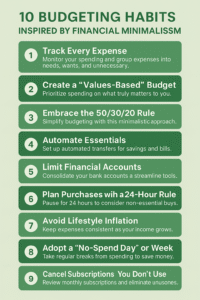
7. Avoid Lifestyle Inflation
As your income increases, resist the urge to upgrade everything. Instead of buying a new car or moving into a bigger house, keep living like you earn less and invest the difference toward long-term goals.
Reminder:
Minimalism values contentment over consumption. You don’t have to “keep up” to feel successful.
8. Adopt a “No-Spend Day” or Week
Regular no-spend days help reset your relationship with money. Use that time to focus on non-material joys—reading, walking, cooking at home, or spending time with loved ones.
9. Cancel Subscriptions You Don’t Use
Streaming services, fitness apps, meal kits—they add up fast. Review all recurring subscriptions every month. If you haven’t used something in 30 days, cancel it.
10. Set Financial Goals That Reflect Freedom, Not Status
Financial minimalism encourages saving not for status symbols, but for flexibility, freedom, and peace. Set goals like building an emergency fund, taking a sabbatical, or paying off debt—not just owning the latest gadgets.
How to Stay Consistent With Minimalist Budgeting
- Review your spending weekly
- Celebrate small wins—like avoiding an unnecessary purchase
- Use visuals like a financial vision board or debt tracker
- Surround yourself with content that promotes simple living
These habits aren’t about restriction—they’re about liberation. Financial minimalism helps you remove the noise so you can focus on what truly enriches your life.
Ready to simplify your finances and live with intention? Start by applying just one or two habits from this list. Over time, they’ll reshape your money mindset and empower you to create a life rooted in clarity, peace, and purpose.